Loading...
VR Space Station Climber
A Unity VR experiment using NASA assets to prototype zero-gravity climbing mechanics with two different VR frameworks.
January 22, 2024
UnityVRC#Meta SDKUltimateXRGame DevelopmentPhysics
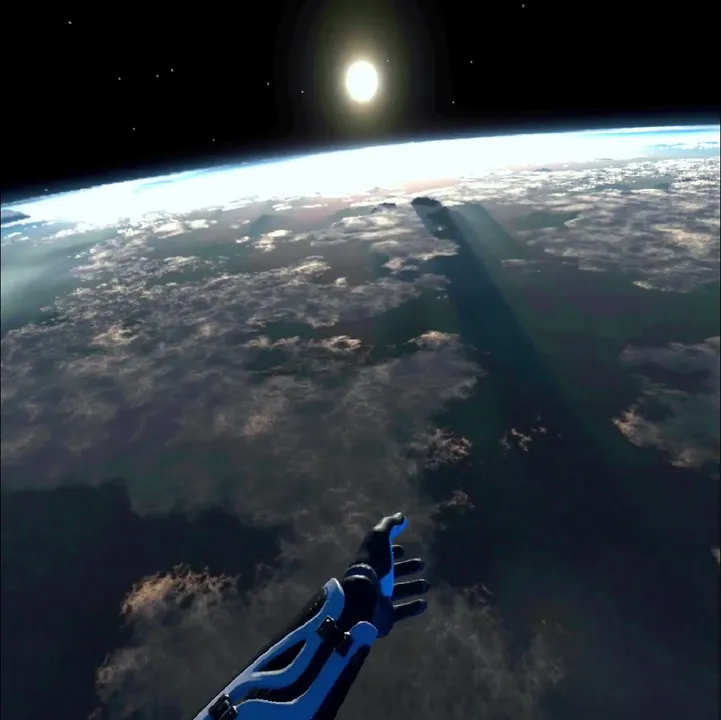
VR Space Station Climber
A short experimental VR project built in Unity to test climbing mechanics in a zero-gravity environment.
The prototype used authentic NASA 3D assets to create a space station environment, then explored different VR frameworks for implementing traversal.
Overview
The goal was simple: test how climbing in VR feels when gravity isn’t part of the equation.
To do this, I implemented the system twice, once with Meta SDK + Unity’s XR Interaction Toolkit, and again using UltimateXR, a preconfigured VR framework designed for rapid iteration.
Technical Implementation
- Built in Unity (C#) with VR support
- Imported free NASA 3D assets for the station environment
- Two climbing implementations:
- Meta SDK + XR Toolkit for direct control and flexibility
- UltimateXR for comparison and faster setup
- Physics-based climbing system simulating weightless traversal
Why It Matters
This project wasn’t about creating a polished product, it was about experimentation.
In just a week, I was able to test how different frameworks affect workflow, how climbing feels in VR, and where Unity’s toolkits excel or fall short for rapid prototyping.
Future Potential
- Expanded traversal systems including push-off movement and tethering
- Multiplayer support for collaborative exploration in zero-gravity
- Use of higher-fidelity station assets and realistic physics
- Potential applications for training simulations as well as entertainment
The VR Space Station Climber shows how fast experimentation in Unity VR can uncover insights about mechanics, frameworks, and player experience, even in a week-long prototype.
Highlights
Zero-Gravity Climbing
Prototype climbing mechanics designed to simulate zero-gravity traversal in VR.
NASA Assets
Built using real NASA-provided 3D assets for an authentic space environment.
Framework Comparison
Tested with both Meta SDK + Unity XR Toolkit and UltimateXR to compare workflows.
Technology Stack
Unity
C#
Meta SDK
XR Interaction Toolkit
UltimateXR
Physics Engine
Inspired by This Project?
Let's work together to create something equally amazing for your next Unity project. Whether it's VR, EEG visualization, or game development, I'm here to help.